


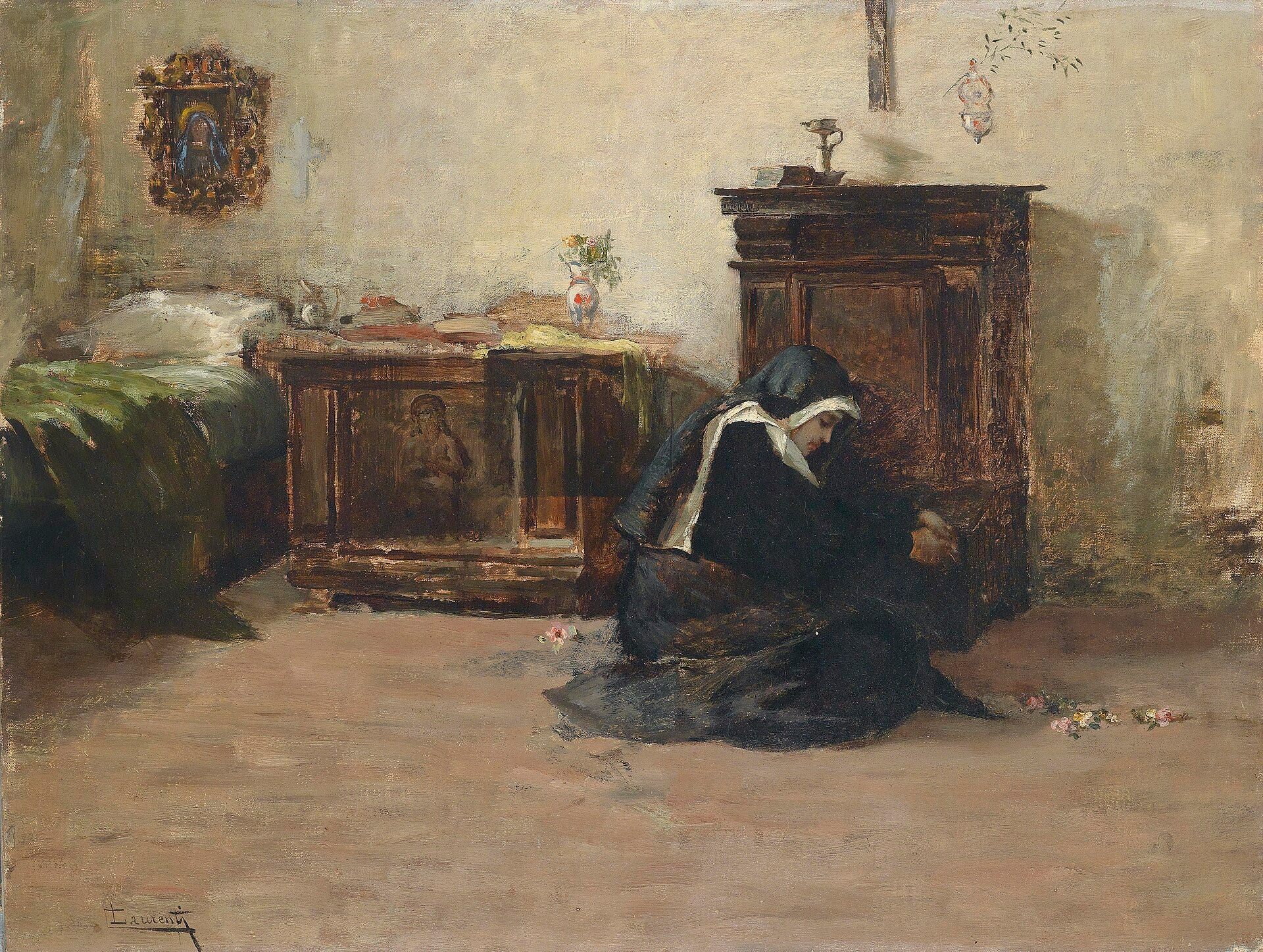
I grew up confused about which religion I belonged to.
Not in a dramatic, tragic way. Just in the ordinary way a kid absorbs half of one thing and half of another and ends up holding both, unsure which hand to raise when someone asks “what are you?” To make things worse, my parents sent me to Catholic school for a while, and as the daughter of a scientist who had taught me about that thing called evolution, I was more or less constantly in trouble with the nuns. They confused me. Holy and horrible. Kind one minute, terrifying the next. So I hovered around them, curious about who was underneath those black habits. As a kid I hovered at the edges of a church that wasn’t quite mine, around rituals I half understood, in a place I was never fully let into. And even now, as a grown woman who has more or less made peace with never fitting neatly into one box, I still can’t resist a nunnery.
Some part of me, maybe some deeply weird past-life part of me, has always wanted to be a nun. I know how that sounds. I do not fit into a nunnery, not even a little. Or do I?
I’ve been reigniting this obsession this summer, wandering into old convents in Malta and Ischia while I’m on vacation, reading the plaques nobody else stops to read. Because the more I learn about who these women actually were, the more I start to wonder if I missed my calling.
Frequency Holders, Kept Out of Sight
Nuns were radical.
Not in the soft, inspirational-quote-on-a-tote-bag sense. Radical in the sense that here was an entire class of women society didn’t know what to do with, and instead of scattering them, someone gave them a building and a job. The job was to pray. To sit inside the walls of the world and hold a frequency the rest of us were too busy, too distracted, or too scared to hold ourselves. The frequency of the divine.
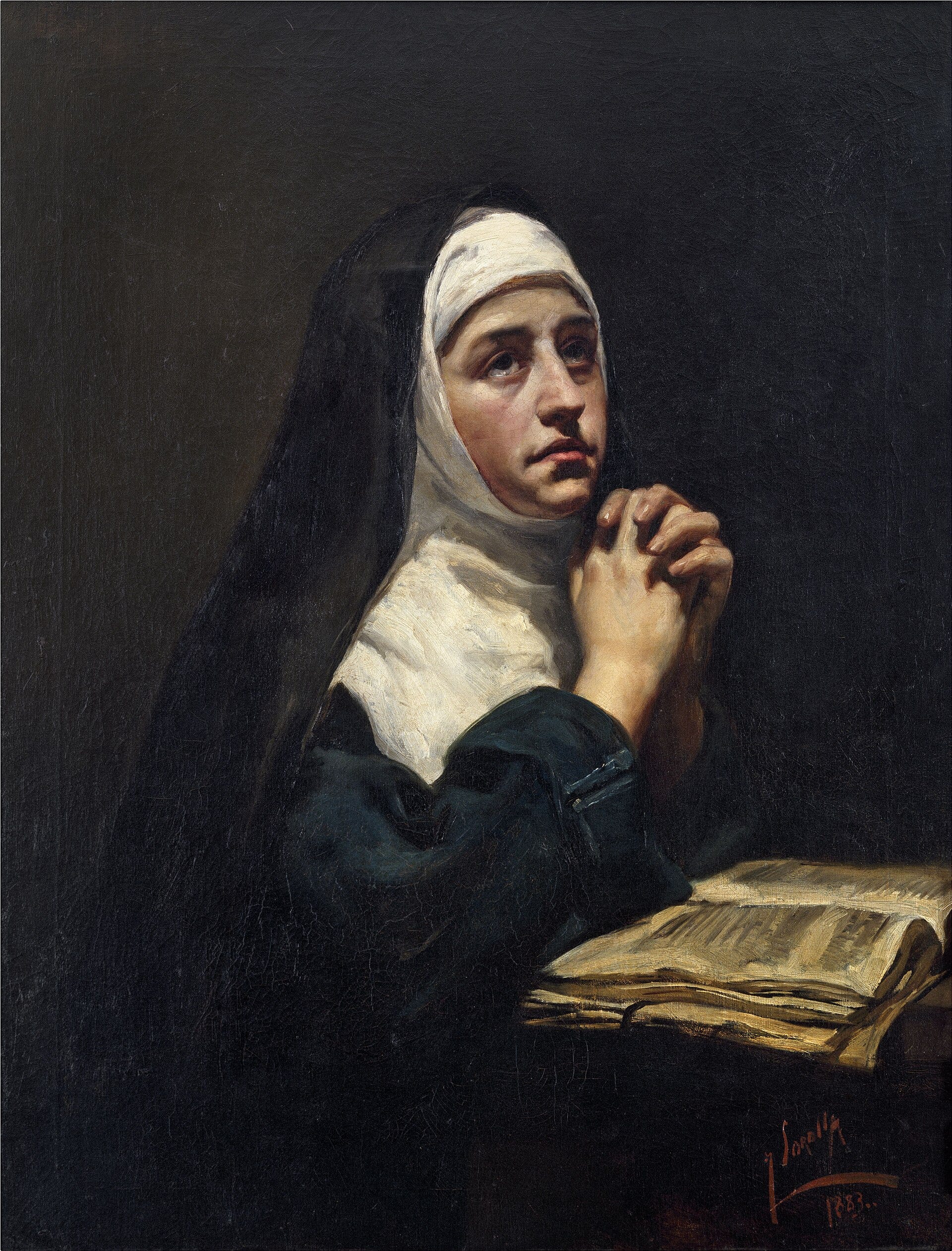
Think about who actually ended up behind those walls. Daughters of wealthy families, sent in to protect the family’s reputation and its inheritance. Unmarried mothers. Widows with nowhere else to go. Women accused of witchcraft. The discarded mistresses of powerful men. Reformed, or simply accused, prostitutes. One Maltese convent’s own records show a three-year-old admitted alongside her mother. “Wayward girl.” “Society daughter.” “Sex worker.” “Political liability.” The convent didn’t really distinguish. It absorbed whoever the world outside didn’t know what to do with.
And in exchange, it gave them something almost nobody else on earth was offered: a place where the work was interior. Where your entire vocation, your entire economic and social value, was to hold stillness. To pray at fixed hours, every day, for a lifetime. In a world that has never quite known what to do with a woman who won’t perform, won’t marry, won’t produce, won’t smile on command, the convent was, strangely, the one place a woman could simply be a frequency and get paid in bread and shelter for it.
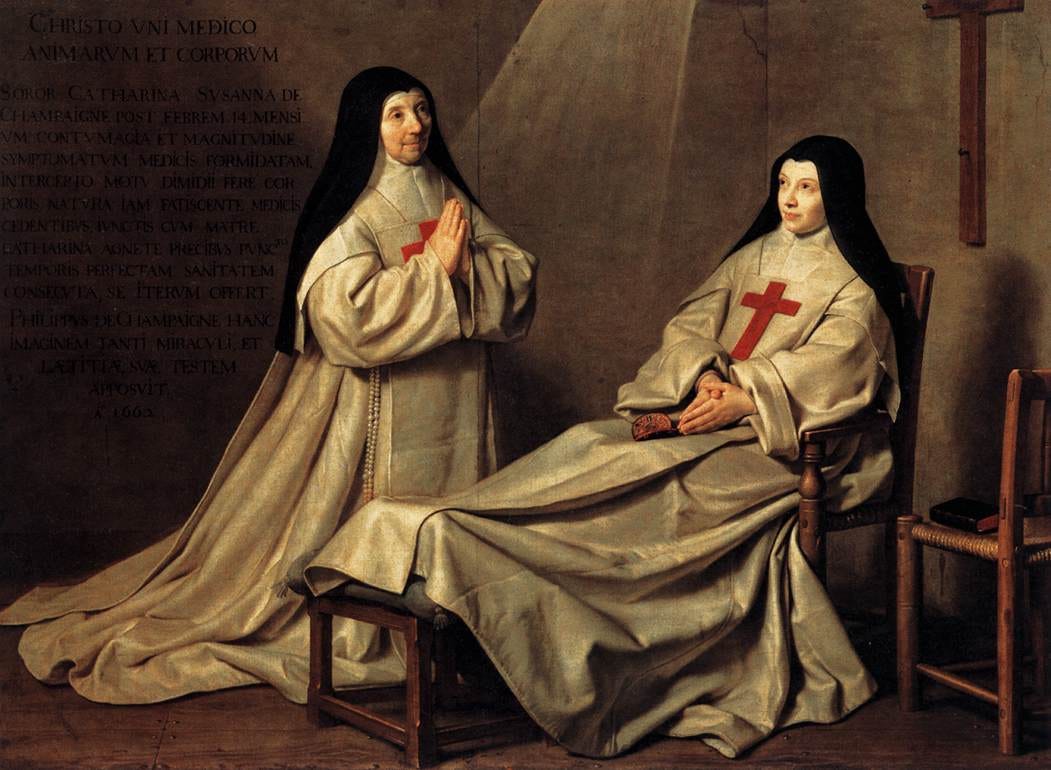
That’s a civilization deciding, centuries before anyone had language for “holding space,” that someone needed to hold the space, and then building an entire architecture around letting women do it.
The Magdalenes: Businesswomen in Habits
The Magdalene nuns take their name from Mary Magdalene, who got misremembered for over a thousand years (thanks to a sixth-century papal conflation) as a reformed prostitute instead of simply a devoted follower of Christ. That mistaken identity became the founding myth for an entire order: communities built to take in “fallen women” and walk them back toward grace. The order was formalized in the 1220s by a German priest named Rudolf of Worms (that name, I know), confirmed by Pope Gregory IX in 1227, and placed under the Rule of St. Augustine in 1232, which is why Magdalene convents so often sit inside Augustinian walls.
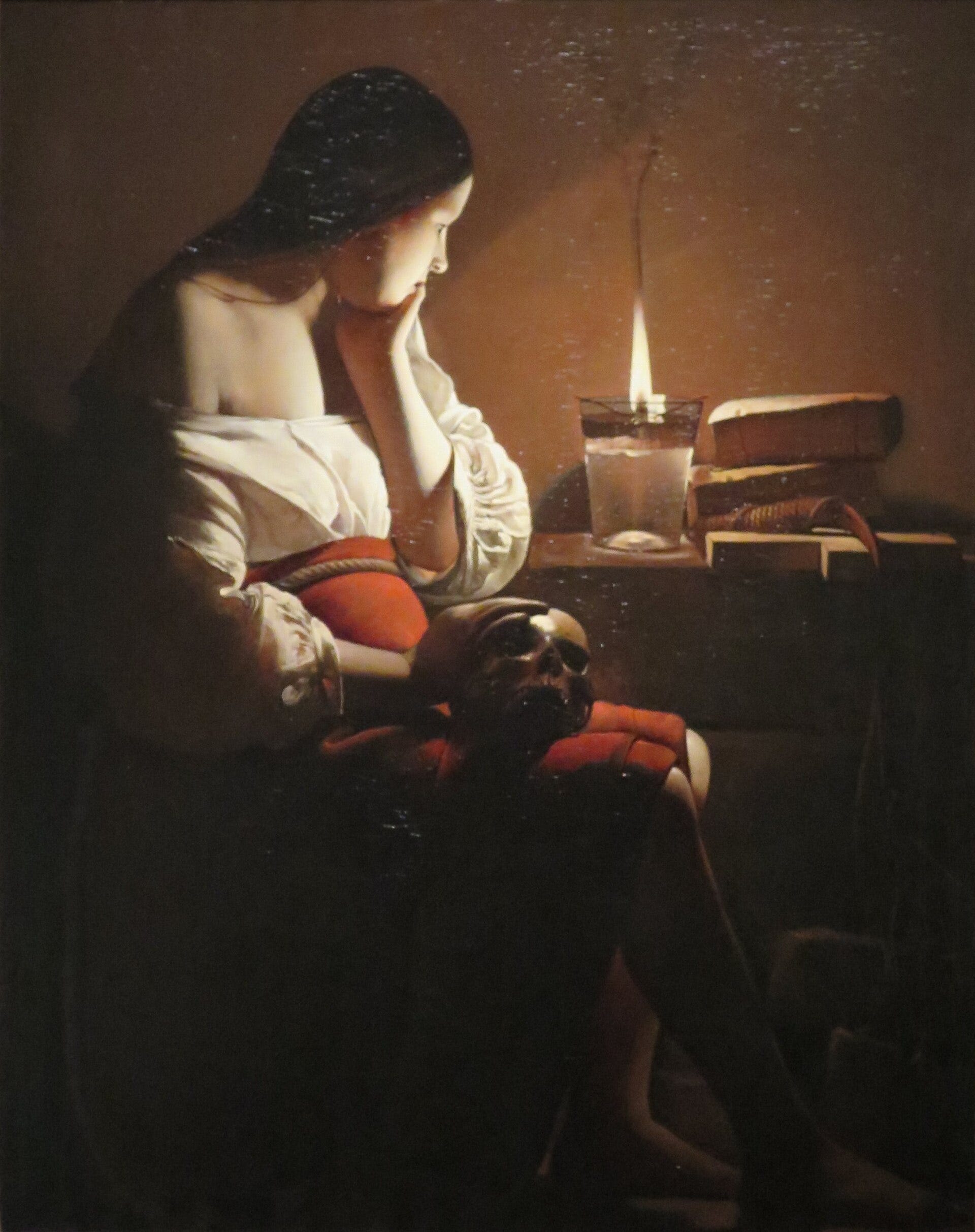
I stood inside one of those walls myself this summer, in Valletta, in the only monastery in the history of the Knights of Malta built specifically for penitent prostitutes.
Inside lived reformed prostitutes, sure, but also daughters of titled Maltese noble families sent there so the family wouldn’t have to split an inheritance across multiple dowries, women accused of witchcraft, and the discarded mistresses of the Order’s own Grand Masters. In 1602 the Pope granted this convent one-fifth of the estate of every prostitute who died in Malta: a literal death tax on sex work, funneled straight into the convent’s coffers. The nuns ran an efficient little collections network to enforce it. By the time Napoleon’s forces dissolved the order in 1798, the convent had become the second-largest shareholder in Malta’s own public bank. A house of cloistered women running what was, functionally, an investment vehicle, built in part on a tax levied against the very women they claimed to be saving.
I can’t turn that into a tidy story. But wow. As a feminist, and as someone who has spent her working life inside of contradictions of identity, the need to sort women into victim or empowered, reformed or exploiter is meaningful. The Magdalenes were somehow both controlled and controlling, all at once. They profited off the very system that pathologized them.
The last Magdalene nun in Malta died in 1846, the quiet closing line of a two-hundred-and-three-year experiment in what happens when you hand a group of “fallen” and “difficult” women both a vow of penance and a functioning balance sheet.
Maybe the real spiritual work isn’t finding the clean narrative. Maybe it’s learning to sit in the one that won’t resolve: power and wound, living in the same body, the same institution, the same four-hundred-year-old stone floor.
The Poor Clares: Death as a Daily Practice
After the Magdalenes, I went to see the Poor Clares, who turned out to be in the business of death.
At the Aragonese Castle on Ischia, a convent of Poor Clare nuns built an entire room for sitting with death, on purpose, every single day.
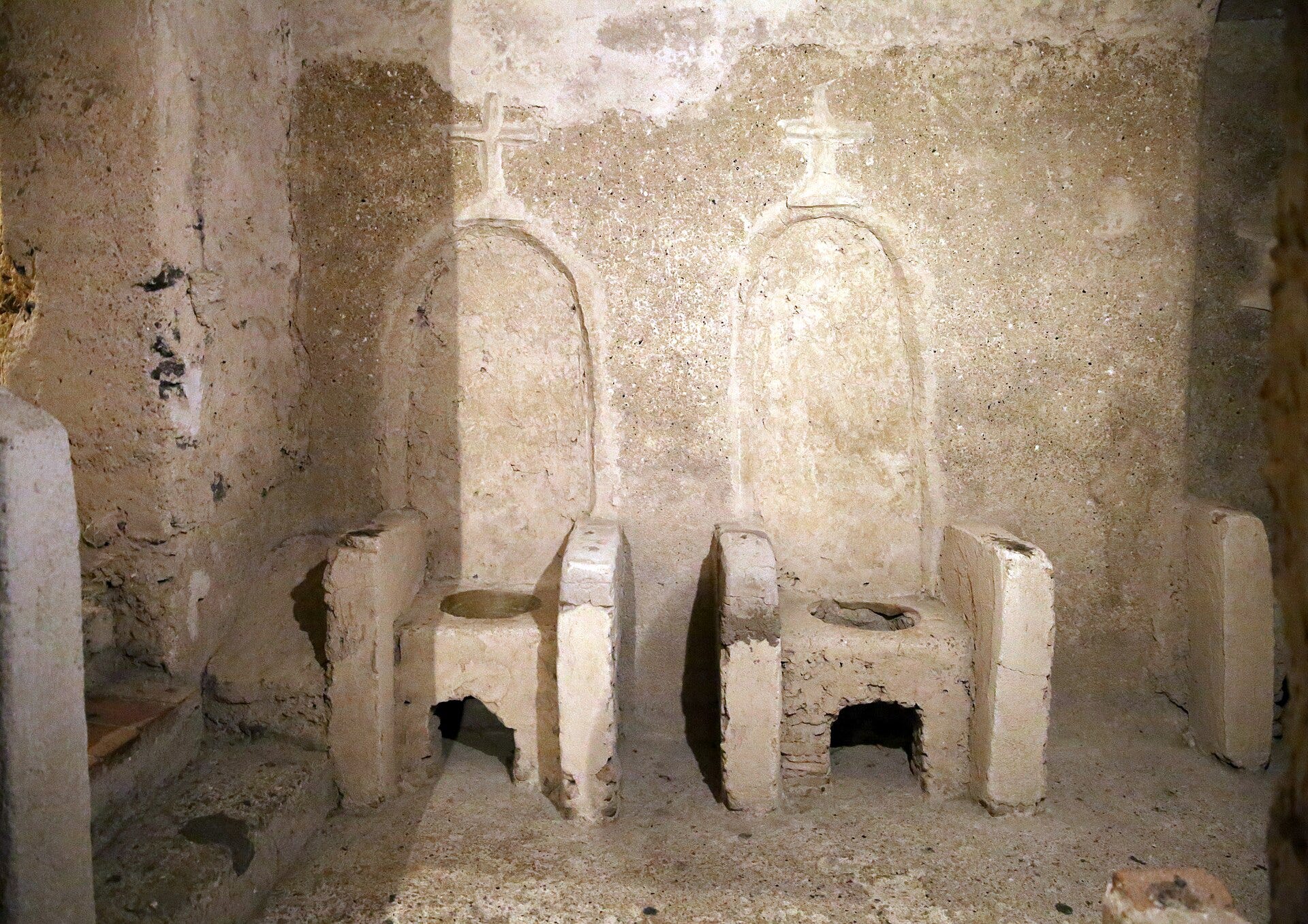
From 1577 to 1809, when a sister died, her body wasn’t buried right away. It was seated upright on a stone chair, the putridarium, with a hole carved into the seat so the fluids of decomposition could drain into a vessel below. Every day, her living sisters walked down into that crypt. Not to grieve and leave. To stay. To pray beside their decomposing sister and sit, in real time, with the impermanence of the body they were wearing too.
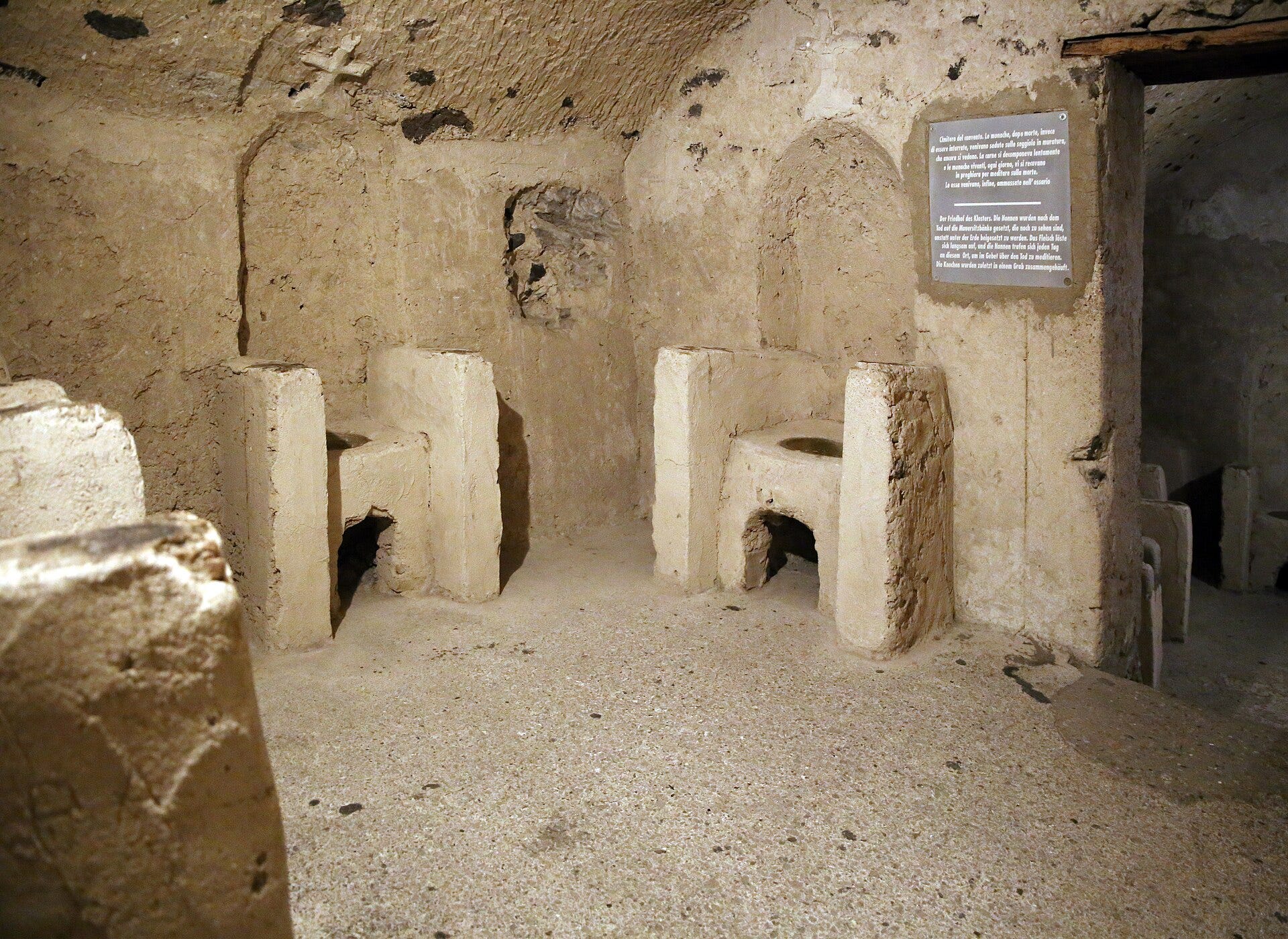
They called the body “a simple container of the spirit.” Watching it dissolve, day after day, wasn’t morbid to them. It was medicine. A discipline. A way of unhooking your identity from your flesh long before your flesh forces the lesson on you, the way it eventually forces it on all of us. Some of the nuns got sick from doing this. They kept doing it anyway, because the point was contact. Staying close enough to endings that your nervous system stops flinching.
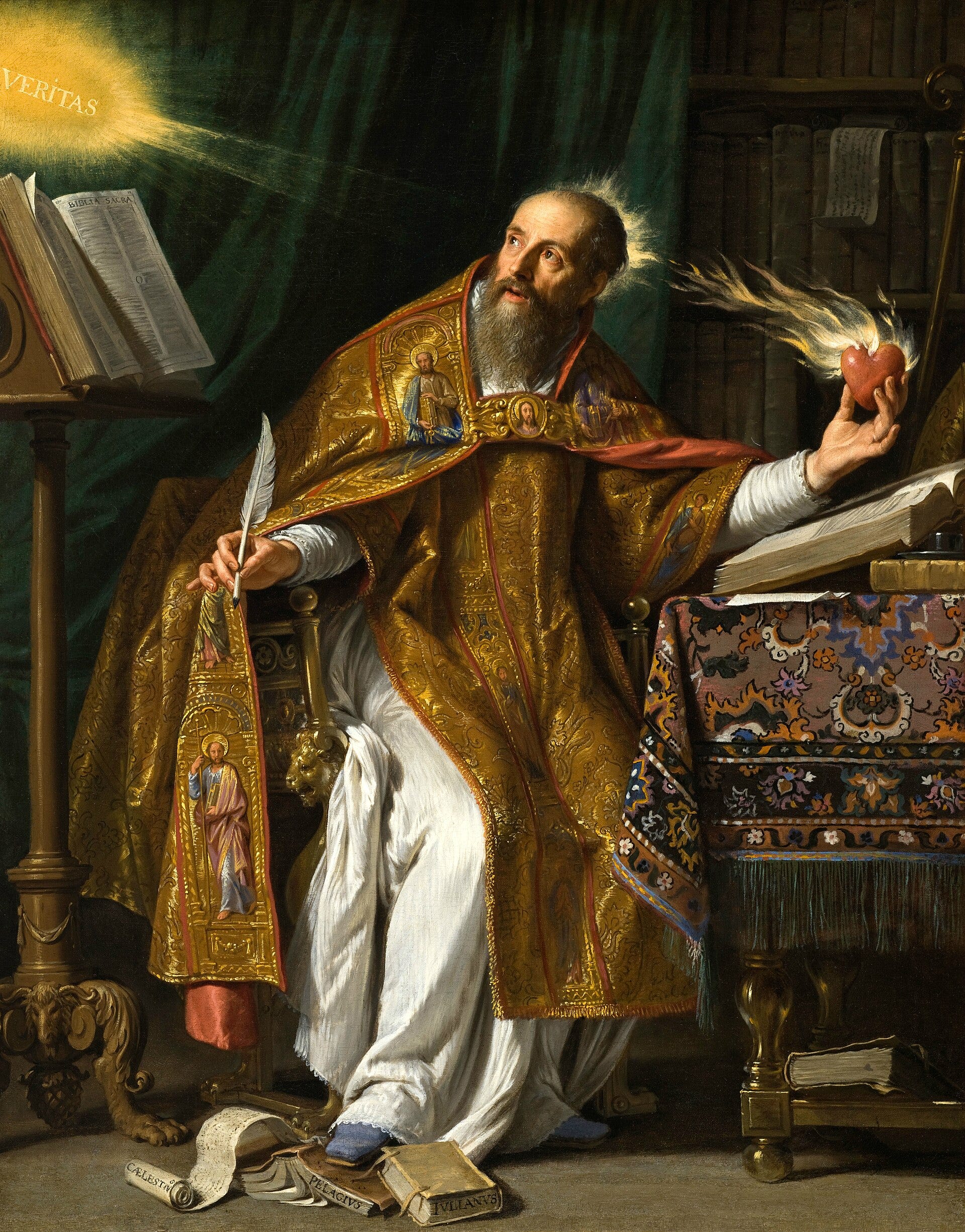
Here’s the thread that ties the Magdalenes, the Poor Clares, and the rest of us together. Both orders lived under the Rule of St. Augustine, written around 397 CE for a small monastic community in Hippo, a rule that still has a lot to teach anyone living outside the walls of any religion at all.
The Augustinians boil their whole way of life down to three things.
The constant search for God through a deep interior life. An ongoing turning inward. Augustine’s own line: “You have made us for yourself, O Lord, and our hearts are restless until they rest in you”. Interiority wasn’t a retreat from the world. It was considered the actual work of being human.
The practical love of neighbor. Augustine refused to separate love of God from love of the person standing in front of him. “Call nothing your own, but let everything be yours in common.” Community wasn’t a nice byproduct of shared belief. It was the proof of it. The sick were to be cared for, specifically. Grievances were to be worked out before they curdled into resentment. Progress in the spiritual life was measured, quite literally, by how much you cared about the common good over your own.
The constant pursuit of truth. Not truth as dogma, but truth as something you keep searching for, together, “with faith and reason, like two great wings.” Augustinian communities were built to hold that search collectively, because a truth pursued alone tends to calcify into ego, and Augustine thought ego was the single biggest thing standing between a person and the divine.
Interiority. Community. Truth. That’s it. That’s the whole operating system underneath cloisters that held penitent prostitutes and noble daughters in the same building, and underneath sisters who prayed daily beside their own decomposing dead.
What strikes me now is how badly we still need all three, and how badly we’ve scattered them. We’ve got interiority, even if it’s called a meditation app. We’ve got community, even if it’s called a group chat. We’ve got truth-seeking, which might be the most urgent edict of all right now. But we’ve split these things into pieces and let them get swallowed by the busyness of modern life, instead of holding them together in one place. That integration, the completeness of the container, is the magic I think we’re missing. Not the habits. Not the vows. Not even the theology, and definitely not the celibacy. It’s the wholeness of the practice. That’s the actual radical technology hiding inside these old stone walls.
So, Do I Fit Into a Nunnery?
Not literally. But what if part of the job, any of our jobs, is just to hold the frequency of the divine in our own particular way? Then we’re all nuns and monks, every one of us, each with our own flavor of prayer.
That’s what I think I was actually circling as a kid, hovering at those gates without knowing why. Not the habit. Not the vow of silence. The permission. The permission to let holding stillness, holding truth, holding the people the world doesn’t know what to do with, count as a real and serious vocation, and not just a phase you grow out of before you get to the “real” things.
The Magdalenes and the Poor Clares never resolved into one clean story, and neither will I. Maybe we’re not contradictions that need sorting out. Maybe we’re just frequency holders, each in our own particular way, habit or no habit, walls or no walls.
Which frequency are you holding?